Saturday, July 5, 2014

Before You Chain (Tether) Your Dog


Dogs on Chains—Why It’s Not a Good Idea


Dogs that are chained run a much higher risk of biting and are more likely to be the dogs that run off and don't come back when called.
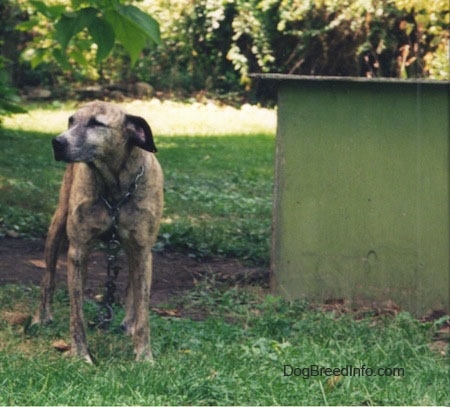


Why? Chaining a dog goes against its natural instincts. Dogs were not meant to be tied up. Most become protective of the area around them and in some cases, downright mean, even to their owners. They feel confined, trapped and it drives them crazy. They are harder to train and some appear to be literally un-trainable, when really they are just going stir crazy. Most chained dogs will take off on you any chance they can get away. And why not? Coming back means they have to go back on the chain and they want to enjoy their freedom, if even for a little while. Not all dogs will be biters and runners if chained, but all dogs would be happier, with a better temperament, if they were not chained. Dogs who are tethered are stressed, bored and anxious. According to the American Humane Association chained dogs are 2.8 times more likely to bite and approximately 25% of fatal dog attacks were from chained dogs.
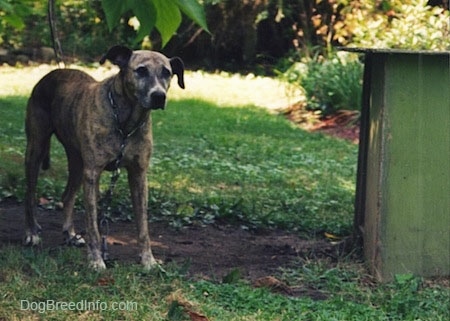

One example of this is the story my neighbor told me about a Keeshond she had as a child. Her parents did not have much time for the dog and the kids were getting older and did not have very much interest in it. As a result the Keeshond ended up on a clothesline run, chained up in the backyard. It got to the point where you could not go near the dog without it growling at you and trying to bite. After a while the parents decided it was not worth the liability. They feared the dog was going to eventually really hurt someone. They found the dog a new home and hoped for the best.  

A few months later they received a phone call from the new owners. Fear shot through the mother as she answered the phone, expecting to hear the dog had bitten someone. Instead they heard how nice and sweet the dog was. Friendly as can be, loves everyone. The new owners were calling to say just how happy they were and that they loved their new Keeshond. Turned out the new owners did not chain the dog. They were in a situation where the dog could be free to walk around the yard. For those who know the breed, you know that Keeshonden are not the type of dog to be mean or to bite. They love everyone and everything. It was the chain, lack of leadershippack structure and exercise that drove the dog to this point. The good thing was it was reversible, the chain was taken away and the dog was placed in a new environment. The dog no longer felt the need to defend and protect, no longer felt trapped and confined. 
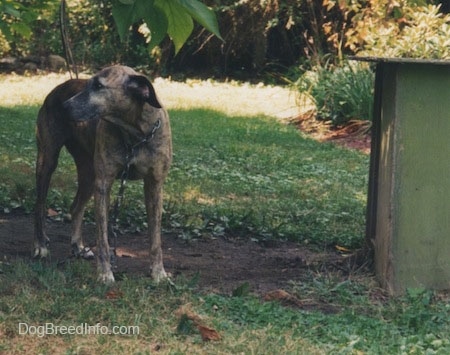

Another case is an acquaintance that owned an English Bulldog. He had the dog tied up in the backyard. One day the dog got off of the chain. One of the neighbor kids tried to bring him home. When the boy grabbed his collar, the dog bit the boy in the face. Why? The dog was confused. He was suddenly free and he did not know how to handle it. Going home meant back on the chain. The owner of the Bulldog had told the neighbor kids not to go near the dog if he ever got free and to come and get him instead. Once again, the English Bulldog in general is excellent with children and loves people, but even a Bulldog will go crazy tied up on a chain all day. In fact, English Bulldogs are one of the worst breeds to chain. They have a strong desire to be by your side. Chaining them all the time drives them crazy. Confined, restricted and trapped...it is not in a dog's nature to be tied up.
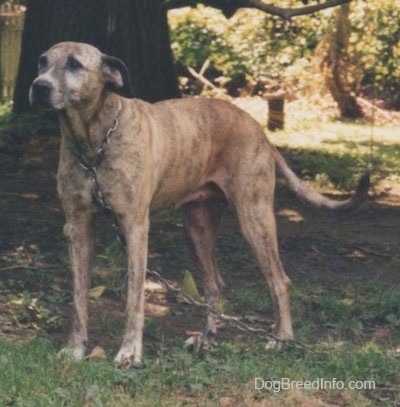

I am not talking about the occasional time when you need to tie your dog up for a little while. There will be times when you will need to tether your dog. I am talking about the Backyard Dogs. The ones with the dog house and a chain. The ones that spend the majority of their time and life chained, sitting and waiting, with nothing else to do but wait and protect. 
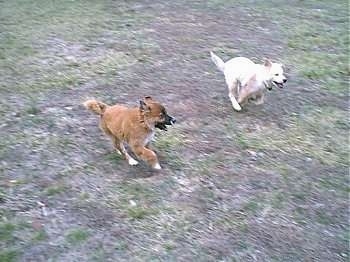
Charlie and Emmy having a blast running free!
Other Options
Electric fences are highly recommended.  You cannot see them, so your yard will look the same and your dog will feel the freedom that dogs enjoy, being able to see around him, yet still have the same safety as an above-ground fence. They are relatively cheap compared to the above-ground fence.

A regular (above-ground) fence is another option. The bigger the area your dog has, the happier he will be, and in return, the happier you will be with your dog.  

Training. Take your dog to obedience classes or teach him yourself. Teach him to stay around your house. Depending on the breed and the area you live in, this is not always an option. Know your breed and decide accordingly.

Outside kennels. I am somewhat skeptical of outside kennels as the place where your dog spends the majority of his time. They are much better than chains and if the owners take the dog out every day for a walk and give it chances to run free and play they can be okay. But once again the dog is in a confined, restricted situation. In the end it all depends on how much time you spend with your dog. If you do not have time to spend with your dog you probably should not have one. On the other hand, if it comes between taking your dog to a kill shelter or chaining him up in your backyard, I would choose the chain. 

Written by Sharon Maguire © Dog Breed Info Center ® All Rights Reserved

No matter how big your yard is and how much the dog runs around in the yard, or where your dog spends the majority of his day, always remember that dogs instinctually need to go on a daily walk to satisfy their migration instinct.


Designer Dogs


(Hybrid Dogs)

Designer dog?? What the heck is a designer dog, you ask?? A "designer" dog (as the media has labeled them) is a cross between two purebred dogs. A purebred dog is one that has been bred over many generations to breed true, meaning each puppy that is born looks and has the same temperament and characteristics as the others. In most cases a standard is written and breeders must follow this written standard. Only dogs that make the written standard are to be bred. Purebred dogs are beneficial in that when you buy a purebred dog you know what you are getting. You know how big your puppy will grow and you know basically what type of care the dog will need. You know the dog’s limits, whether it is capable of agility, hunting, search and rescue, police work, herding, flock guarding, or just simply being a companion dog. You have a pretty good idea how much exercise the dog will require. When one breeds purebred dogs great care must be taken to ensure the lines do not become too thin. Even with all the best DNA testing available genetic problems can occur, however with the proper testing these problems can be greatly reduced. To give you a simple analogy, let's say there was a law passed that stated only people with red hair and green eyes with a high IQ could have children, with the end goal being everyone in the USA to be smart with red hair and green eyes. If this were to happen, as you can imagine, our gene pool would eventually become thin, and many genetic problems would occur. This is why it is very important to ask breeders of purebred dogs what types of genetic testing they perform.
 
 
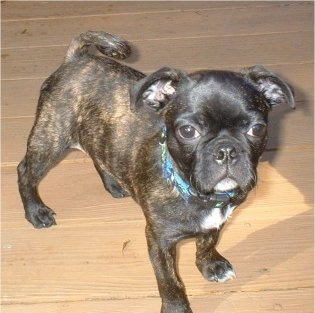
Harley, the Bug (Boston Terrier / Pug mix)
Harley the Buggs (Boston Terrier/Pug mix)
What's the difference between a designer dog and a mutt? Generally, a mutt is of uncertain ancestry. A designer dog has documented purebred ancestry, and one knows for sure what it is. The ACHC is the leading registry for designer dogs.

So what's up with these hybrid "designer" dogs? Are they healthier? Hybrid dogs can still have genetic problems because you are crossing two first-generation dogs, however the percentage of hybrid dogs with genetic problems is much lower than purebred dogs because the gene pool is mixed. Breeders who breed purebred to purebred creating a first generation hybrid believe in the heterosis effect and hybrid vigor. Vigor means "physical or mental strength, energy, or force." Unlike purebred dogs, when you adopt a hybrid, you do not know exactly what the temperament, size of the dog, or exact look of the dog will be.

When you breed two different types of purebred dogs together you can get any combination of any of the characteristics found in either breed. If you are stuck on a hybrid dog how do you know which one to choose? Read the temperament and care for both breeds in the cross and be prepared for any combination of the two. If everything about both breeds matches your and your family’s personality and lifestyle, then you can most likely assume this cross will work for you. If there is ANYTHING about either breed in the cross that you do not feel matches what you are looking for, avoid that cross. Do not assume or take the chance that only the good characteristics will emerge. You may be in for a big surprise and it is not fair to the puppy to chance that.

It is also important to be aware not all of these designer hybrid dogs being bred are 50% purebred to 50% purebred. It is very common for breeders to breed multi-generation crosses. A simple F1 generation cross is said to produce the most hybrid vigor in the dog and the further down the multi-generation chain, the more vigor is lost in the hybrid, but there are some benefits to multi-generation crossing. If you want to greaten your chances of certain traits, such as non-shedding, sometimes it is necessary to move further down the generation chain, risking less vigor.

To help you understand this concept we will use the Goldendoodle as an example. A Goldendoodle is a cross between the Golden Retriever and the Poodle (usually the Standard Poodle). In general we will call the first purebred "purebred-A" and the second "purebred-B." Note: the examples of the differences in coat only apply to the Goldendoodle hybrid; all other hybrids will vary in their own way depending on what breeds are in the cross.

F1=first generation puppy—50% purebred-A and 50% purebred-B. For example, a Golden Retriever to Poodle cross is first generation, resulting in healthier offspring. In this particular Goldendoodle cross, hair type can be smooth like a Golden, wiry like an Irish wolfhound or wavy/shaggy, they can shed or not shed and pups in the same litter can vary. This is not the best cross for people with severe allergies.

F1b=backcross puppy—25% purebred-A and 75% purebred-B. For example, an F1 Goldendoodle and Poodle cross; this is a Goldendoodle bred back to Poodle— the wavy, curly, shaggy-look doodle (poodle cross) is very consistent in coat types. F1b is the MOST likely of any doodle to be non-shedding and allergy-friendly, and is the easiest coat to take care of.
  • F2=second-generation puppy—F1 hybrid crossed with an F1 hybrid. For example, an F1 Goldendoodle crossed with an F1 Goldendoodle. In this combination you get the same percentage of purebred-A as purebred-B as you would in an F1 hybrid. In the case of the Goldendoodle, they are more likely to shed.
  • F2b=second-generation backcross puppy—F1 bred to a F1b (hybrid backcross)
  • F3=F2 hybrid to F2 hybrid
  • Multi-generation=F3 or higher-generation hybrid crossed with F3 or higher-generation hybrid

 
To sum things up:
Purebred-A x Purebred-B = F1 Hybrid Dog
F1 x Purebred-A = F1b Hybrid Dog
F1 x F1  = F2 Hybrid Dog
F1 x F1b = F2b Hybrid Dog
F2 x F2 = F3 Hybrid Dog
Dogs are not to be disposed of like old toasters when they do not perform as you wish. They are living creatures. Cross a Labrador with a Poodle (Labradoodle) and you may or may not get a dog that sheds. Most experienced breeders can give you a pretty good idea what characteristics in a pup will emerge as the puppy grows. For example, in the Labradoodle, some breeders are able to tell which coat the pup will have, the Poodle’s or the Labrador’s, but still, this cannot be guaranteed. Sometimes it is harder to tell what type of temperament the pup will take on, as some characteristics do not appear until the pup is older, past adopting age.
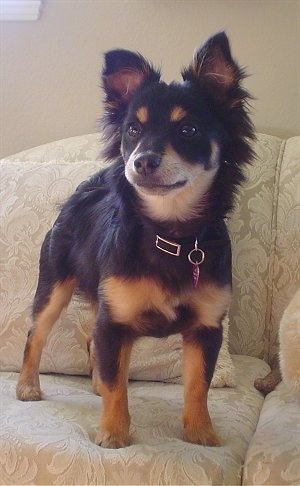
Zoë, the Pomapoo = Pomeranian Mother/ Toy Poodle Father
Zoë the Pomapoo = Pomeranian mother/Toy Poodle father
Whether or not you choose a purebred dog or a "designer" hybrid mix, do your homework and research, research, research. Remember, adopting a dog should be a life-long commitment and not something that should be taken lightly. Before you adopt a dog ask yourself, Are You Ready for a Dog?
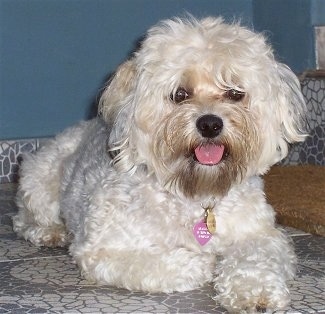
Yorkipoo - Yorkshire Terrier / Poodle mix
Maggie the Yorkipoo (Yorkie/Poodle cross) from Brazil at 18 months old


List of Hybrid Dogs—P-Q


(Designer Dogs) (Boutique Dogs)


Please Note: A hybrid dog is not a BREED; it is a hybrid, which means it is a mix of more than one purebred dog.


A | B | C | D | E | F | G | H | I | J | K | L | M | N | O | P-Q | R | S  | T | U-V | W | X-Y-Z

Papastzu - (Papillon / Shih Tzu mix)
Paperanian - (Papillon / Pomeranian mix)
Papi-poo - (Papillon / Poodle mix)
Papichon - (Papillon / Bichon mix)
Papigriffon - (Brussels Griffon / Papillon mix)
Papijack - (Papillon / Jack Russell Terrier mix)
Papimo - (American Eskimo / Papillon mix)
Papitese - (Maltese / Papillon mix)
Papshund - (Dachshund / Papillon mix)
Patterdale Shepherd - (Patterdale Terrier x German Shepherd mix)
Patterjack - (Patterdale Terrier / Jack Russell mix)
Patterland - (Patterdale Terrier / Lakeland Terrier mix)
Patton Terrier - (Patterdale Terrier / Boston Terrier mix)
Peagle - (Beagle / Pekingese mix)
Peek-A-Pom - (Pekingese/Pomeranian mix)
Pek-A-Rat - (Pekingese x Rat Terrier mix)
Pekalier - (Cavalier King Charles / Pekingese mix)
Pekarin - (Cairn Terrier / Pekingese mix)
Peke-A-Chon - (Bichon Frise / Pekingese mix)
Peke-A-Pap - (Papillon / Pekingese mix)
Peke-A-Pin - (Miniature Pinscher / Pekingese mix)
Peke-A-Tese  - (Maltese / Pekingese mix)
Peka-A-West - (Pekingnese / West Highland White Terrier mix)
Peke-Italian - (Pekingnese / Italian Greyhound mix)
Pekehund -  (Pekingese / Dachshund mix)
Pekepoo - (Pekingese / Poodle mix)
Pembroke Cocker Corgi - (Pembroke Welsh Corgi / American Cocker Spaniel mix)
Pembroke Sheltie - (Shetland Sheepdog x Pembroke Welsh Corgi mix)
Petite Goldendoodle - (Golden Retriever / Cocker Spaniel / Poodle mix)
Petite Labradoodle -  (Labrador Retriever / Cocker Spaniel / Poodle mix)
Plica - (Basset Hound / Ori Pei mix)
Pin-Tzu - (Miniature Pinscher / Shih Tzu mix)
Pineranian - (Miniature Pinscher / Pomeranian mix)
Pinny-Poo - (Miniature Pinscher / Poodle mix)
Pit Heeler - (American Pitbull Terrier x Blue Heeler mix)
Pitsky - (American Pitbull Terrier x Siberian Husky or Alaskan Husky mix)
Pitweiler - (American Pit Bull Terrier / Rottweiler mix)
Pocket Pitbull - (American Pit Bull Terrier / Patterdale Terrier mix)
Pointer Bay -  (German Shorthaired Pointer / Chesapeake Bay Retriever mix)
Pom-A-Nauze - (Miniature Schnauzer / Pomeranian mix)
Pom-A-Pug - (Pomeranian / Pug mix)
Pom-Coton -  (Coton De Tulear / Pomeranian mix)
Pom-Shi - (Pomeranian / Shiba Inu mix)
Pom-Silk - (Pomeranian / Silky Terrier mix)
Pom Terrier - (Pomeranian / Toy Fox Terrier mix)
Pomapoo - (Pomeranian / Poodle mix)
Pomchi - (Pomeranian / Chihuahua mix)
Pomeagle - (Beagle / Pomeranian mix)
Pomerat -   (Pomeranian / American Rat Terrier mix)
Pomimo - (American Eskimo / Pomeranian mix)
Pomsky - ( Pomeranian / Husky mix)
Pomston - (Boston Terrier / Pomeranian mix)
Poo-Shi - (Poodle / Shiba Inu mix)
Poo-Ton - (Coton De Tulear / Poodle mix)
Poochin - (Japanese Chin / Poodle mix)
Poogle - (Beagle / Poodle mix)
Poolky - (Poodle / Silky Terrier mix)
Pootalian - (Italian Greyhound / Poodle mix)
Poovanese - (Havanese / Poodle mix)
Poshies - (Pomeranian / Shetland Sheepdog mix)
Powderpap - (Papillon /  Chinese Crested mix)
Pug-A-Mo - (Pug / American Eskimo Dog mix)
Pug-Coton - (Pug / Coton de Tulear mix)
Pug-Zu - (Pug / Shih Tzu mix)
Pugairn - (Pug / Cairn Terrier mix)
Pugalier - (Cavalier King Charles / Pug mix)
Pugapoo - (Pug / Poodle mix)
Pugese - (Pug / Chinese Crested mix)
Puggat - (Pug / American Rat Terrier mix)
Puggit - (Pug / Italian Greyhound mix)
Puggle  - (Pug / Beagle mix)
Pughasa  - (Pug / Lhasa Apso mix)
Puginese - (Pug / Pekingese mix)
Pugland - (Pug / Westie mix)
Pugottie - (Pug / Scottish Terrier mix)
Pugshire - (Pug / Yorkshire Terrier mix)
Pugwich - (Pug / Norwich Terrier mix)
Pushon - (Pug / Bichon Frise mix)
Pyredoodle - (Great Pyrenees / Poodle mix)
Pyrador - (Great Pyrenees / Labrador Retriever mix)

A | B | C | D | E | F | G | H | I | J | K | L | M | N | O | P-Q | R | S  | T | U-V | W | X-Y-Z

The word ”hybrid,” when referring to genetics means, “the offspring of genetically dissimilar parents or stock, especially the offspring produced by breeding plants or animals of different varieties, species, or races.” In general, the word means, “something of mixed origin or composition.” Hybrid dogs, or designer dogs as some call them, are becoming quite popular. Below is a list of the most popular hybrid dogs. The best way to determine the traits of a mixed breed is to look up all breeds in the cross and know you can get any combination of any of the characteristics found in all breeds. The Dog Breed Info Center® does not attempt to interpret the temperaments of each individual hybrid mix because the differences in the dogs, even within the same litter, can vary greatly. If you do not feel the temperament of one of the purebreds in the mix is suited for your lifestyle, then that hybrid dog is not for you. Do not take a gamble that the puppy or dog will turn out like the other breed in the mix. Choosing a dog simply for its looks is a foolish way to choose a dog. Read the article on Designer Dogs for more info on these mixed breeds.

Scientifically speaking, the term "hybrid” is incorrect as all dogs are a sub-species of wolf (Canis lupus familiaris) and as such, it is impossible to have a hybrid as they are two of the same species. Although technically incorrect, the term "hybrid" is the name which is predominantly used for these mixes and therefore it is the name we will also use when referring to them.